
Why Loxone Wireless Beats WiFi Smart Gadgets
Professional wireless automation that works reliably even when your neighbors' WiFi doesn't
The Smart Home Journey Begins with WiFi
Smart home technology is becoming increasingly accessible, and many homeowners start their automation journey with affordable WiFi-based smart gadgets. From smart bulbs to WiFi plugs and sensors, these devices promise convenience and modern living at an attractive price point.
While these entry-level solutions work well for initial experimentation, they reveal significant limitations once you move beyond a few devices, especially in apartment buildings where hundreds of WiFi networks compete for the same airspace.
Professional wireless automation systems like Loxone Wireless provide a fundamentally different approach - one designed specifically for reliable building automation rather than consumer-grade connectivity.
The Hidden Challenge of WiFi in Apartments
Why reliability decreases as your building fills with smart devices
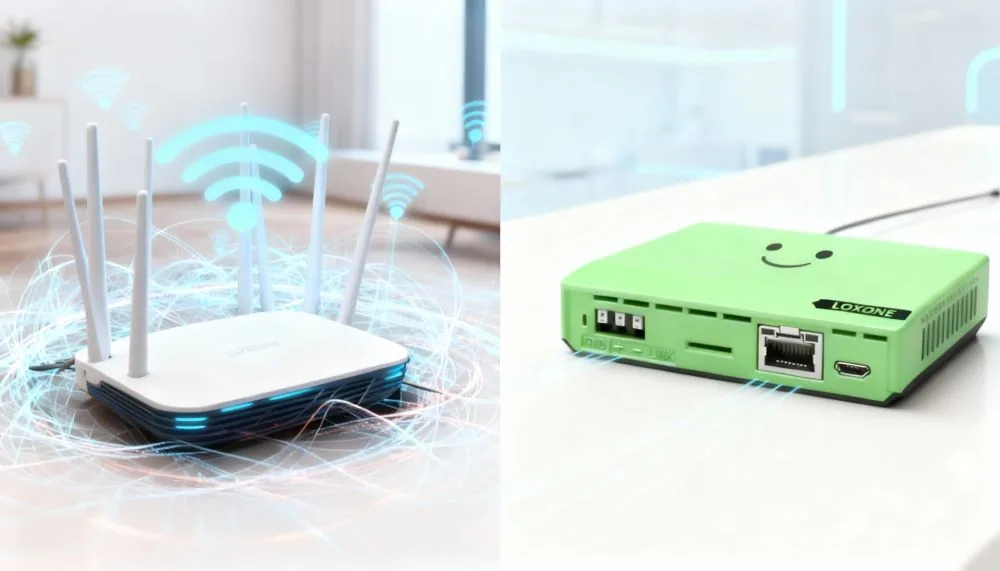
In a typical apartment building, each unit operates its own WiFi router, and many residents add smart devices that all communicate on the same 2.4 GHz frequency band. This creates a crowded electromagnetic environment where signals constantly compete and interfere with each other.
Overlapping WiFi Networks
Every apartment broadcasts multiple WiFi networks (2.4 GHz and 5 GHz). In a building with 20 apartments, your smart devices might compete with over 40 WiFi networks for reliable communication.
Packet Loss and Delays
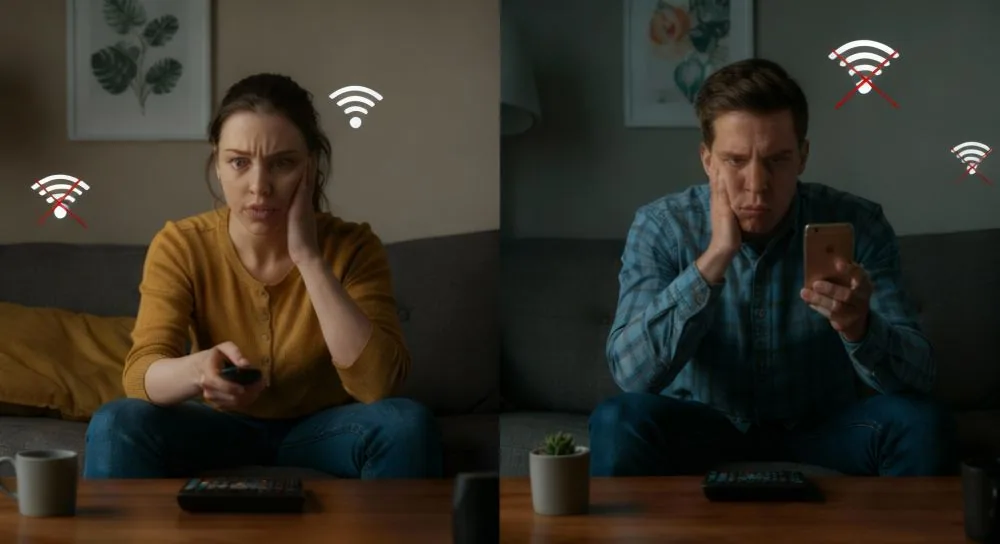
When too many devices transmit simultaneously, packets get lost and need retransmission. This causes noticeable delays in smart device response times, making automation feel sluggish and unreliable.
Degrading Performance Over Time
As more neighbors adopt smart home technology, the WiFi congestion intensifies. A system that worked fine initially may become progressively less reliable as building-wide device density increases.
How Loxone Wireless Solves the Interference Problem
Purpose-built frequency for reliable automation
Loxone Wireless operates on a completely different frequency band specifically designed for low-interference wireless automation. Unlike consumer WiFi devices that crowd the 2.4 GHz band, Loxone uses a dedicated protocol optimized for building automation.
Non-WiFi Frequency
Loxone Wireless does not use WiFi protocols. It operates on a frequency band with significantly less congestion, ensuring stable communication even in dense apartment environments.
Interference Resistance
The dedicated automation frequency means your lighting, shading, and heating systems operate independently from WiFi networks. Your smart home continues working reliably regardless of WiFi congestion.
Consistent Performance
Because Loxone Wireless avoids crowded WiFi bands, it maintains predictable performance regardless of how many neighbors install new devices or routers.

Reliability Where It Matters Most
Instant response for lighting, shading, heating, and security
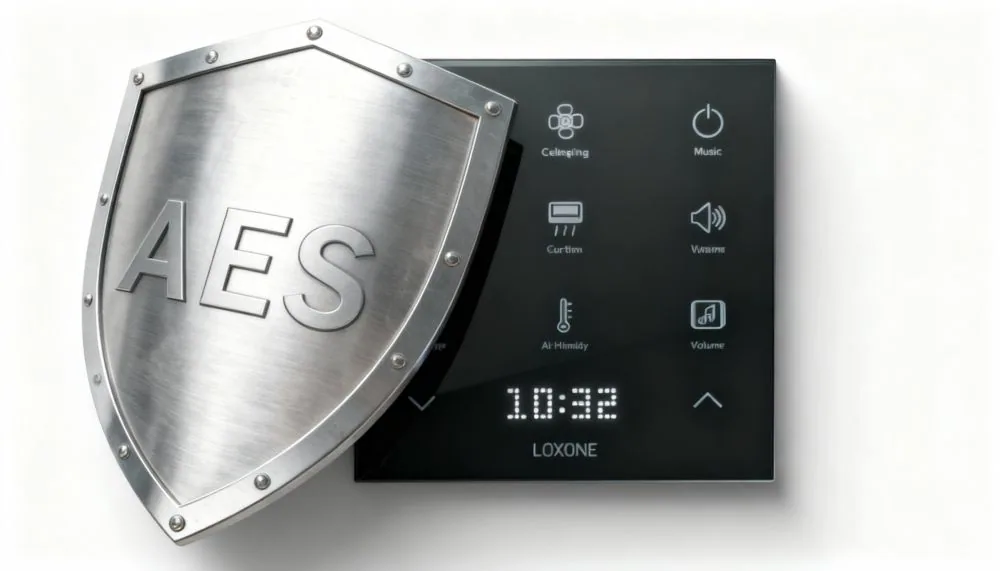
A smart home is only smart when it responds instantly and predictably. Automation that controls essential systems - lighting, climate, shading, and security - cannot afford delays or dropped commands. The communication is encrypted using IPSec AES 128bit, with a different encryption key for each Air Interface / Loxone installation.
Instant Lighting Control
Loxone Wireless ensures that light switches respond instantly without network delays. Your lights turn on the moment you press the switch, just as you expect from traditional electrical systems.
Climate and Energy Management
Heating and cooling automation requires reliable communication to optimize energy consumption. WiFi dropouts can leave systems running inefficiently, wasting energy and money.
Security System Integrity
Security functions like motion detection, door contacts, and alarm systems must work without interruption. Loxone Wireless provides the reliability essential for safety-critical automation.
Superior Signal Penetration Through Building Materials
Mesh network technology for reliable coverage throughout your building
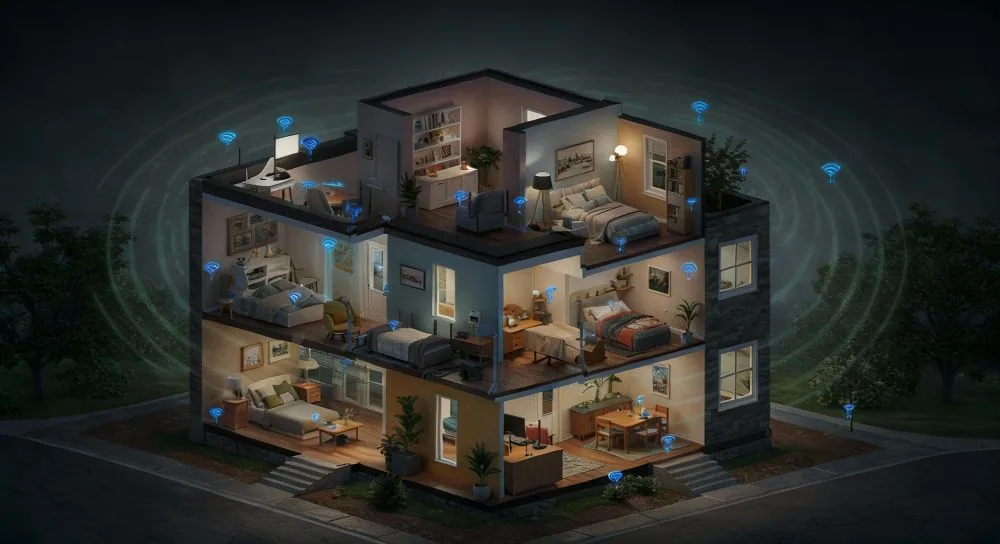
Unlike WiFi systems where every device must maintain a direct connection to the router, Loxone Wireless devices communicate with each other in a mesh network. Each device connects to the nearest device with the strongest signal, and that device forwards the communication to the next device until it reaches the Loxone wireless controller. This mesh architecture ensures reliable coverage even in buildings with thick walls and challenging layouts.
Mesh Network Architecture
Every Loxone Wireless device acts as a signal repeater. Devices communicate with the nearest device that has a stronger signal, creating a self-organizing network that automatically finds the best path to the controller - unlike WiFi where each device must connect directly to the router.
Automatic Signal Routing
The system automatically routes signals through multiple devices to reach the wireless controller. If one path is blocked by a thick wall, the signal simply takes an alternative route through other devices, ensuring uninterrupted communication.
No Single Point of Failure
Because devices communicate through multiple paths, the system remains operational even if one device temporarily loses connection. WiFi systems fail when the router connection is lost, but Loxone Wireless mesh networks maintain communication through alternative device chains.
Scalable Automation Without Complexity
One ecosystem, no additional apps or cloud accounts
As your smart home grows, WiFi-based systems force you to manage multiple apps, cloud accounts, and update schedules. Each manufacturer requires its own ecosystem, creating a fragmented user experience.
Unified Control Interface
All Loxone Wireless devices integrate into a single Loxone Config interface. You control everything from one app without juggling multiple platforms or cloud services.
Stable Performance at Scale
Adding more Loxone Wireless devices does not degrade network performance. The system is designed to handle large installations with hundreds of devices without communication bottlenecks.
Long-Term Compatibility
Loxone maintains backward compatibility with older devices, protecting your investment. Unlike consumer IoT gadgets that become obsolete after a few years, Loxone systems remain functional and updatable.
Lower Total Cost of Ownership
Why professional wireless pays for itself over time
While Loxone Wireless devices have a higher initial purchase price compared to cheap WiFi gadgets, the total cost of ownership tells a different story when you consider maintenance, reliability, and longevity.
Reduced Replacement Costs
WiFi smart gadgets often fail due to firmware issues, cloud service shutdowns, or WiFi incompatibility. Loxone Wireless devices are built for long-term professional use, significantly reducing replacement frequency.
Lower Maintenance Burden
WiFi systems require frequent troubleshooting, firmware updates, and network reconfiguration. Loxone systems operate reliably with minimal maintenance intervention.
Energy Efficiency Gains
Reliable automation enables precise climate control and lighting management, reducing energy waste. The efficiency improvements often offset the higher upfront investment within a few years.
Professional Installation Value
While professional installation adds to initial costs, it ensures proper system design, optimal device placement, and reliable operation from day one - eliminating the trial-and-error common with DIY WiFi setups.
Ready for Reliable Wireless Automation?
Discover how Loxone Wireless can provide interference-free smart home control in your apartment or building.